

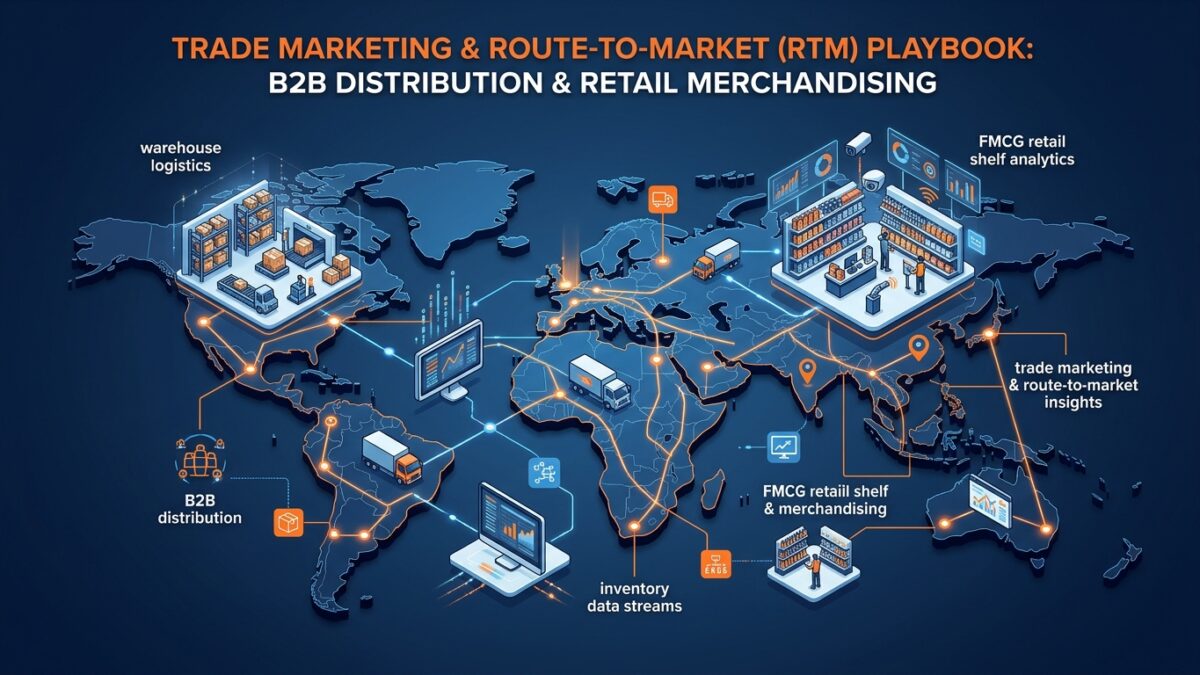
📌 Executive Takeaways: Modern Route-to-Market (RTM) & Trade Marketing
- Route-to-Market (RTM) Definition: RTM is the systematic architecture of channel partners, direct-to-retail distribution, logistics, and sales incentives that moves products from manufacturers to end-consumers with minimal friction and maximum margin.
- Trade Marketing vs. Consumer Marketing: While consumer marketing creates brand pull, trade marketing creates channel push, securing prime shelf space, distributor buy-in, and point-of-sale (POS) conversion velocity.
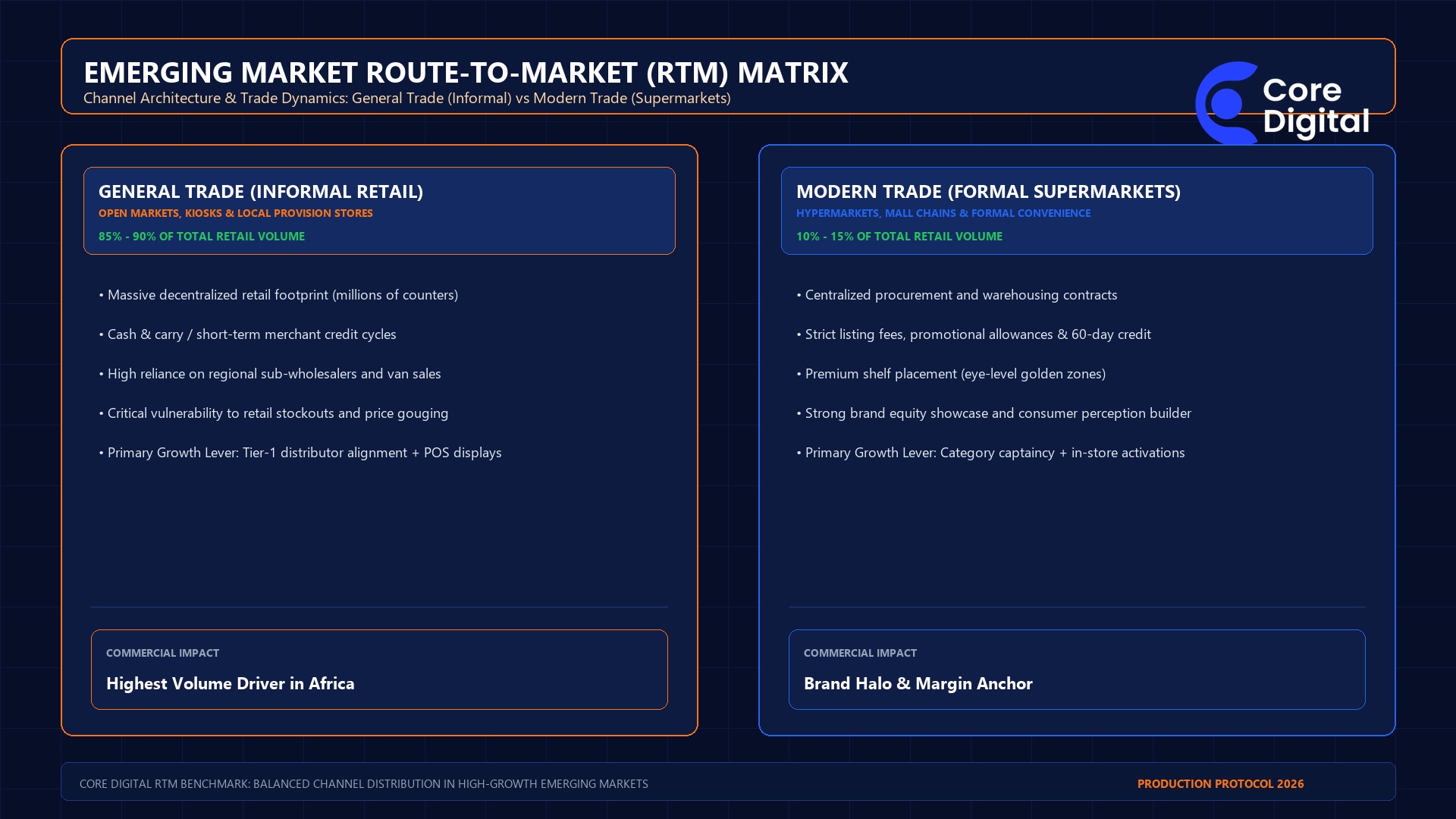
- Modern Trade vs. General Trade: In African markets like Nigeria, General Trade (open markets, informal kiosks) accounts for 85-90% of total retail volume, requiring localized distributor networks and cash-flow-aligned credit frameworks.
- Tech-Enabled Visibility: Replacing manual paper logs with automated mobile distributor apps and real-time inventory tracking reduces stockouts by up to 34% and prevents trade spend leakage.
Achieved with real-time field force automation and automated distributor routing.
Dominating informal retail counters requires tailored micro-distributor incentives.
Connecting retail re-orders via WhatsApp eliminates warehouse inventory backlogs.
When international buyers or corporate procurement teams evaluate vendors, they are not just looking for the cheapest option. They are asking: ‘Will this company deliver reliably without putting our business at risk?’ Winning lucrative long-term contracts comes from demonstrating verified stability, clear delivery milestones, and transparent communication.
Combining organic search visibility with authentic brand leadership allows top companies to scale customer lifetime value (LTV) and win clients sustainably.
1. The Strategic Imperative of Route-to-Market (RTM) in Emerging Economies
In mature Western markets, consumer goods manufacturers rely heavily on consolidated Modern Trade (hypermarkets and national supermarket chains). In emerging economies like Nigeria, Kenya, and Ghana, the retail reality is radically inverted: over 85% of total retail volume flows through fragmented General Trade, thousands of traditional open markets, neighborhood kiosks, and semi-wholesalers.
Companies that attempt to execute generic marketing campaigns without a fortified Route-to-Market framework suffer from severe channel leakage: high consumer awareness, but widespread out-of-stock situations at the retail counter. When a shopper asks for your product and it isn’t on the shelf, your marketing spend effectively subsidizes your competitor.
2. The 4 Pillars of High-Velocity Trade Marketing
- Distributor Partner Alignment: Aligning tier-1 distributors with tiered volume rebates, working capital financing support, and territorial exclusivity agreements that incentivize brand loyalty.
- Point-of-Sale (POS) Dominance: Securing golden-zone eye-level shelf placement, branded display units (FSDUs), and high-visibility POS merchandising collateral that drives impulse purchases.
- Trade Promotion ROI Management: Moving away from indiscriminate wholesaler discounts toward performance-based sell-out incentives that reward distributors for reaching new retail outlets rather than stockpiling inventory.
- Field Force Automation (SFA): Equipping field sales representatives with GPS-verified mobile applications that track store visit compliance, stock availability, and competitor pricing in real time.
| Channel Parameter | General Trade (Informal Markets) | Modern Trade (Supermarkets & Malls) |
|---|---|---|
| Retail Volume Contribution | 85% – 90% of total commercial volume | 10% – 15% of total commercial volume |
| Payment & Credit Terms | Cash-on-delivery or short 7-day merchant credit | 45 to 90-day credit cycles with formal invoicing |
| Merchandising Lever | Hanging strips, counter-top jars, outdoor branded kiosks | End-caps, eye-level golden shelf zones, free-standing display units (FSDUs) |
| Strategic Business Function | Massive cash-flow generation & market share anchor | Brand equity prestige, premium product pricing showcase |
3. Connecting Physical Distribution to Digital Lead Routing
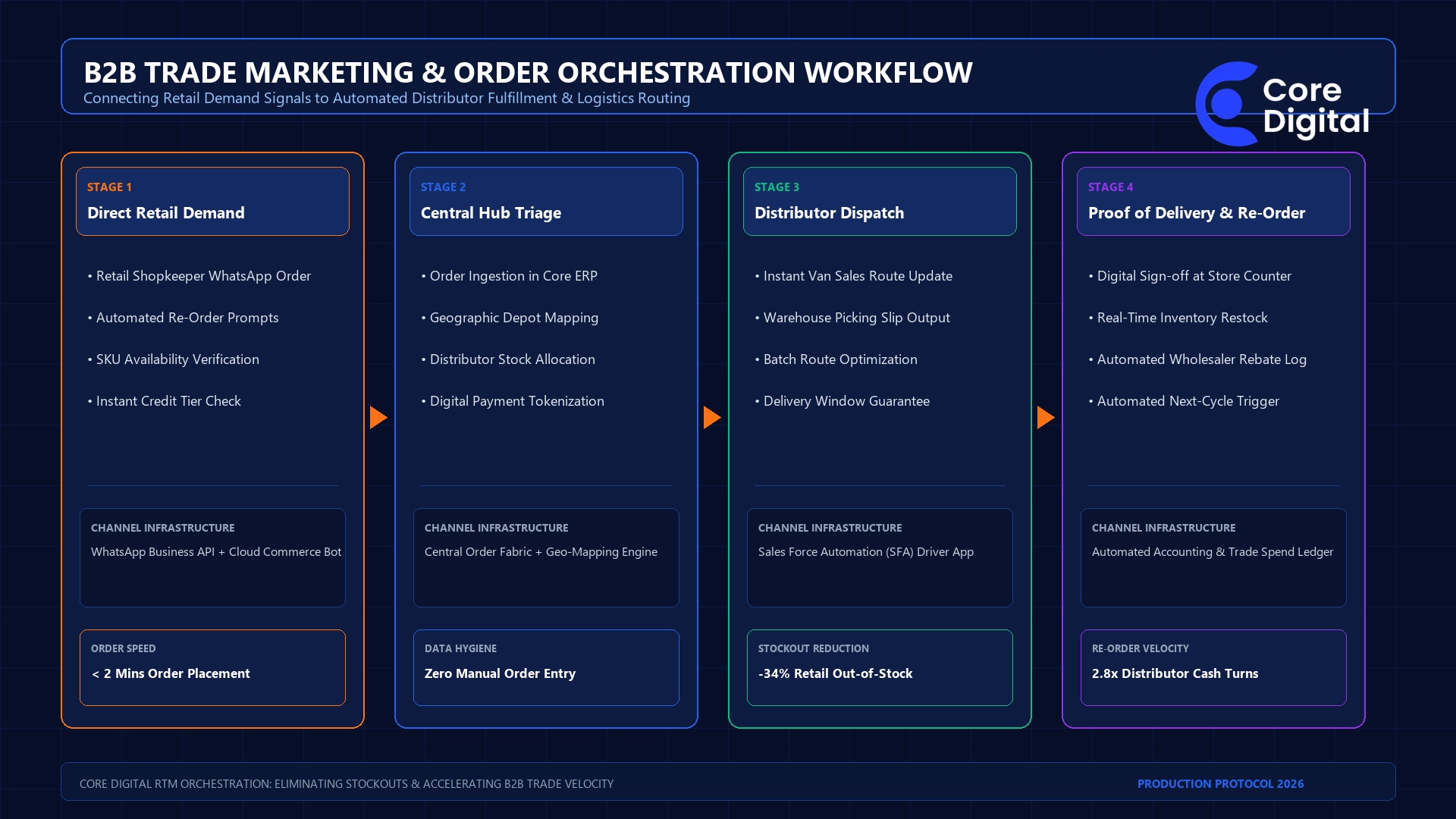
At Core Digital, we integrate physical trade marketing with modern digital infrastructure. By deploying centralized B2B ordering portals and automated WhatsApp business ordering bots, consumer brands can bypass intermediate distributor bottlenecks, capture direct re-order signals from retail shop owners, and automatically route logistics orders to regional hubs in seconds.
Scale Your Commercial Route-to-Market (RTM) Engine
Eliminate retail stockouts and dominate commercial distribution. At Core Digital, we architect tech-enabled trade marketing pipelines and automated B2B ordering workflows that maximize channel profitability.