
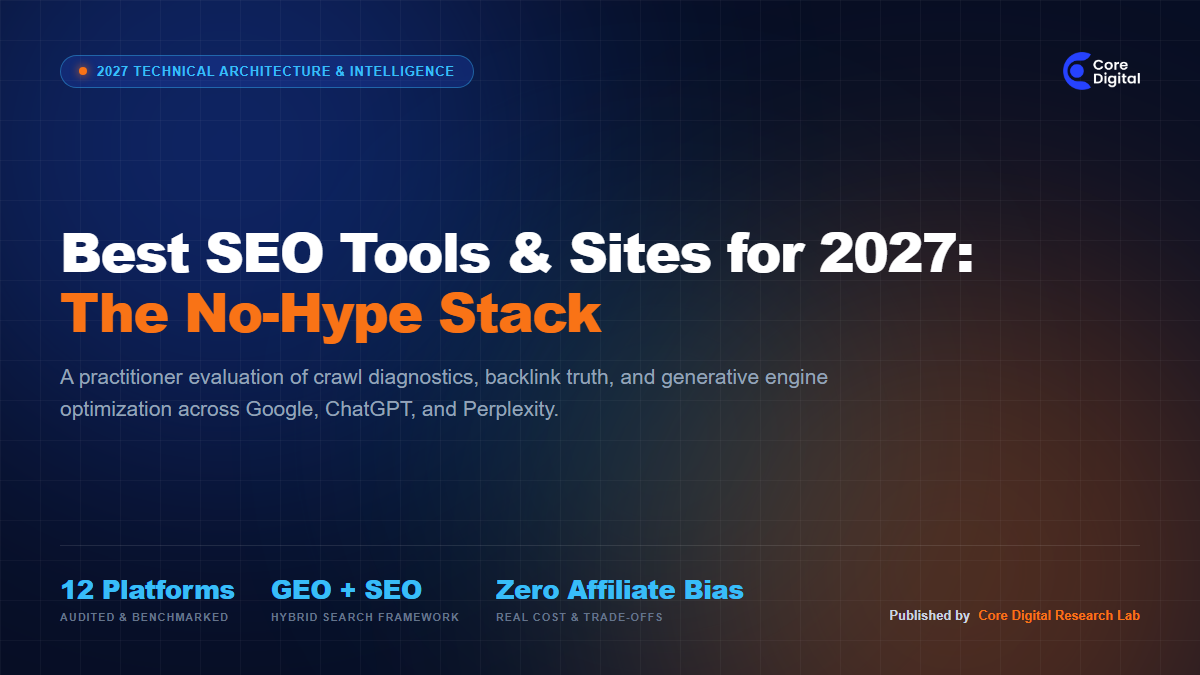
2027 Search Stack Summary
The standard SEO playbook of subscribing to a single all-in-one SaaS suite and publishing generic keyword targeted articles is no longer viable. Modern search is split across classic crawler indices (Google, Bing) and synthetic answer engines (ChatGPT Search, Perplexity, Google AI Overviews). Winning teams structure their tooling across four deliberate layers: first-party log truth (Google Search Console, Cloudflare), deep technical rendering (Screaming Frog), competitor backlink intelligence (Ahrefs, Ubersuggest), and generative engine citation tracking (Perplexity, JSON-LD knowledge graphs).
Every December, marketing blogs publish lists titled “Top 25 SEO Tools You Need.” Almost every single one of those articles is an affiliate link roundup written by someone who has not audited a server log or managed a client crawl budget in years. They rank platforms based on which software company pays the highest recurring commission, not which tool actually protects your organic revenue.
I have watched commercial teams in Lagos, Nairobi, and London spend fifteen hundred dollars every month on enterprise SaaS dashboards that nobody logs into after week three. They purchase subscriptions with five hundred features when their real organic bottlenecks are simple: pages failing to render in Googlebot, broken internal linking, or complete invisibility inside AI answer engines.
This guide takes the opposite approach. Below is the exact software architecture we use at Core Digital to diagnose enterprise sites, track generative citations, and drive measurable revenue across competitive markets.
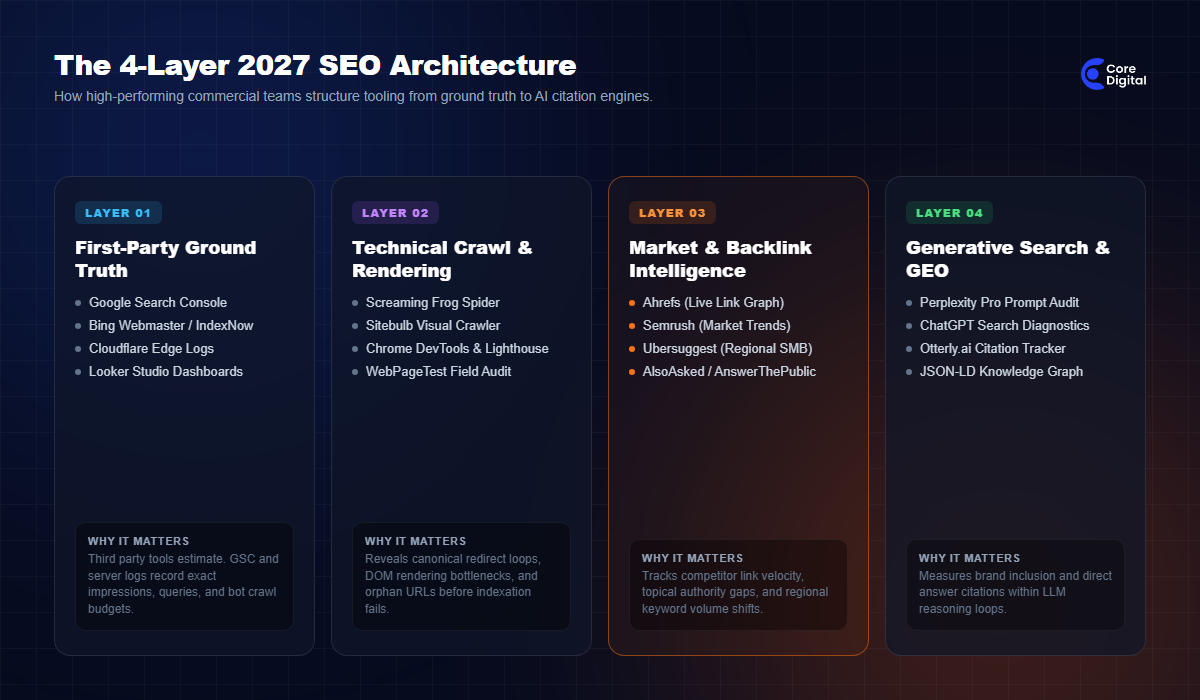
Figure 1: The 4-layer modern search stack, separating ground truth measurement from generative engine visibility.
Layer 1: First-Party Ground Truth (The Non-Negotiable Core)
Third party SEO tools use clickstream panels and scraped estimates. When a third party tool tells you a keyword gets 1,200 monthly searches, that figure is a statistical approximation derived from browser extensions and historical models. It is useful for relative sizing, but it is not reality.
Your first-party tools are the only platforms reporting what actual search engines are doing on your server.
1. Google Search Console (GSC)
Google Search Console is completely free, and it is the single most valuable tool in digital marketing. If you could only have one tab open to run an SEO operation, this is it.
- What it does best: Shows the exact search queries impressions, actual clicks, average ranking position, and index coverage status directly from Google.
- How to use it in 2027: Stop just looking at aggregate traffic graphs. Go to the “Pages” tab under Indexing and look at “Crawled – currently not indexed” and “Discovered – currently not indexed.” That report tells you whether Google considers your content worth the electricity required to index it.
- Practitioner limitation: GSC groups query data and caps exports at 1,000 rows in the default web interface. Connect GSC to BigQuery or Looker Studio to preserve your historical log and analyze long-tail queries without sampling.
2. Bing Webmaster Tools & IndexNow
Five years ago, many marketers ignored Bing. Doing that now is negligence.
- Why it matters: OpenAI powers ChatGPT Search through Bing indexation and partnerships. If your website is blocked, penalised, or misconfigured in Bing Webmaster Tools, your brand disappears from ChatGPT citations.
- IndexNow protocol: By implementing IndexNow via your CMS or Cloudflare, your server pings search engines the second you publish or update a page. You no longer have to wait days for a bot to stumble across your sitemap.
3. Cloudflare Edge Workers & Server Logs
Server log analysis used to require hiring specialized systems engineers to parse Apache or Nginx access files. With modern CDN tooling like Cloudflare, you can inspect real-time crawler requests at the edge. You can see precisely when Googlebot Smartphone, Bingbot, or GPTBot hit your URLs, which status codes they received, and how much bandwidth they consumed.
Layer 2: Technical Crawl & Rendering Diagnostics
Websites built on modern JavaScript frameworks (Next.js, Nuxt, React, or heavy WordPress page builders) often look fine in a desktop browser while serving a blank white screen to search engine crawlers. Technical crawlers simulate how bots read your code.
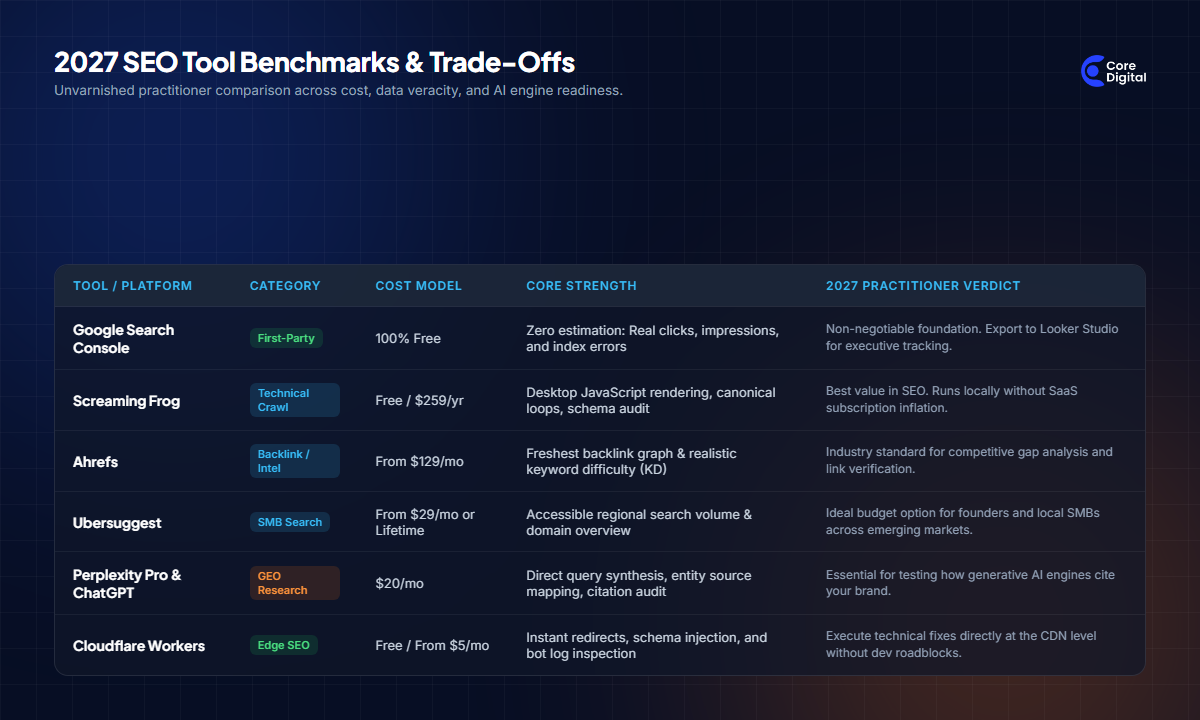
Figure 2: Real-world benchmark comparison across cost, data veracity, and AI engine readiness.
4. Screaming Frog SEO Spider
Screaming Frog is a desktop software application that crawls your website locally on your computer. It is the absolute industry gold standard for technical diagnostics.
- Pricing: Free up to 500 URLs; £209 (roughly $259) per year for the paid license.
- Why it beats cloud crawlers: Unlike cloud crawlers that charge per-credit fees for every re-crawl, you can crawl a million pages as many times as your laptop memory allows.
- Key capabilities: Full JavaScript rendering via embedded Chromium, custom regex extraction, schema validation, orphan URL discovery via GSC API integration, and redirect chain detection.
- The verdict: The best purchase in SEO. If you manage a site with more than fifty pages, this license pays for itself on day one.
5. Sitebulb
Sitebulb is the primary alternative to Screaming Frog. While Screaming Frog gives you raw spreadsheets of data, Sitebulb specializes in visual interpretation and prioritized technical recommendations.
- Best feature: Internal PageRank flow visualization. Sitebulb maps out your internal linking architecture as a visual graph, showing you instantly if important commercial pages are buried five clicks deep in navigation dead ends.
- Pricing: $13.50/month for a single desktop user; $35/month for cloud-assisted features.
Layer 3: Market Intelligence & Competitor Backlinks
To understand where your competitors get their authority and which content topics drive commercial pipeline, you need third-party market aggregators.
6. Ahrefs
Ahrefs built its reputation on having the cleanest, fastest updating web crawler outside of Google itself.
- Core Strength: The backlink profile. When auditing acquired domains, analyzing competitor digital PR campaigns, or inspecting anchor text distribution, Ahrefs link graph is unmatched.
- Content Explorer: Allows you to find unlinked brand mentions, high-performing articles by social velocity, and broken link building opportunities across any niche.
- Drawbacks: Pricing starts at $129 per month and scales aggressively based on credit consumption. If you run multiple large projects, credit limits require careful usage management.
7. Semrush
Semrush is a broader digital marketing suite that combines organic search, paid search (PPC), social monitoring, and content auditing.
- Core Strength: Paid search integration and keyword gap analysis. Semrush makes it easy to compare your domain against four competitors simultaneously to see which keywords they rank for that you completely lack.
- Local SEO tools: Strong listing management tools for local business directories and Google Business Profile citation consistency.
- Pricing: Starts at $139.95 per month.
8. Ubersuggest
Ubersuggest, developed by Neil Patel Digital, fills a critical space in the market: accessible, high utility search research for small businesses and growing teams.
- Why it matters for emerging markets: For founders in Nigeria, Kenya, Ghana, and across Africa who face strict monthly bank card foreign exchange limits, paying $140 every month for an enterprise suite is often impractical. Ubersuggest offers plans starting around $29 per month and lifetime access options that provide immediate budget predictability.
- Core Strength: Clean keyword ideas, search intent classification (commercial, informational, transactional), and simple site audits that non-technical founders can interpret in five minutes.
Layer 4: Generative Engine Optimization (GEO) & AI Citation Auditing
In 2027, users do not just click ten blue links. They ask complex questions to Perplexity, ChatGPT Search, Claude, and Google AI Overviews. These systems do not rank pages by traditional link weight alone; they synthesize direct answers using entity recognition, semantic confidence, and high-citation sources.
9. Perplexity Pro & ChatGPT Search Diagnostics
The most effective way to audit your generative search presence is still manual, deliberate prompt testing.
Run high-intent queries that your ideal clients ask, such as “Who are the top technical SEO agencies in Lagos for enterprise migration?” or “What is the average cost of B2B marketing automation in West Africa?” Note which websites the model cites in its footnotes. If your competitors are cited and you are missing, review their content structure: they likely have structured factual claims, clear table definitions, and verifiable author credentials that make it easy for language models to extract their text with high confidence.
10. JSON-LD Entity Graph & Schema Engines
Language models and search engines parse schema markup to understand the entities on your page without ambiguity. Use schema tools to generate nested JSON-LD structured data covering:
- Organization Schema: Clear verification of legal name, physical headquarters, phone number, executive leaders, and verified social profiles.
- Article & Author Schema: Demonstrating E-E-A-T by linking the author directly to their verifiable professional credentials.
- FAQPage Schema: Structuring direct answers that search algorithms can pull directly into rich results and featured snippets.
How to Choose Your Tool Stack Based on Budget & Team Stage
The Solo Founder Stack ($0 – $30/mo)
For startups, creators, and lean SMBs needing clean organic traction.
- Google Search Console (Free)
- Bing Webmaster Tools & IndexNow (Free)
- Screaming Frog Free Tier (Up to 500 URLs)
- Ubersuggest or Google Keyword Planner
- Perplexity Free / Manual verification
The Growing Agency Stack ($150 – $400/mo)
For digital agencies and scale-ups managing ongoing client growth.
- GSC + Looker Studio Custom Client Reports
- Screaming Frog Paid License ($259/yr)
- Ahrefs Standard or Semrush Pro
- Cloudflare Workers for Edge Technical Tweaks
- Perplexity Pro for Generative Engine Testing
The Enterprise Brand Stack ($1,000+/mo)
For multi-brand conglomerates, banks, and large eCommerce catalogs.
- BigQuery GSC Warehouse Pipeline
- Sitebulb Cloud or Botify Log Analyzer
- Ahrefs Enterprise with API Access
- Dedicated Knowledge Graph & Schema Automation
- Automated LLM Share-of-Voice Monitoring
Frequently Asked Questions (FAQs)
What is the single best free SEO tool for beginners in 2027?
Google Search Console. It is the only platform that provides unvarnished first-party data directly from Google on which queries your website ranks for, how many people click, and which technical errors prevent your pages from being indexed.
Can AI replace traditional SEO software like Ahrefs and Screaming Frog?
No. Generative AI tools like ChatGPT are language models, not web crawlers or live link indexers. While AI can analyze text and draft schema markup, you still require crawlers like Screaming Frog to test JavaScript rendering and indexation, and platforms like Ahrefs to measure backlink equity across the web.
Is Ahrefs or Semrush better for businesses in Nigeria and Africa?
Both tools have strong international datasets. Ahrefs generally provides a more accurate backlink index and conservative keyword difficulty score, making it ideal for technical teams. Semrush offers broader competitor PPC data and local listing tools. For businesses working with local currency constraints, Ubersuggest often serves as a practical, high-value alternative.
How does Generative Engine Optimization (GEO) differ from traditional SEO?
Traditional SEO focuses on earning organic rankings on search result pages by optimizing for keywords, page speed, and backlinks. GEO focuses on getting your brand and data cited as an authoritative reference inside generative AI answers (ChatGPT, Perplexity, Google AI Overviews). GEO prioritizes factual clarity, author credentials, structured data, and unassailable entity authority.
Why is Bing Webmaster Tools critical for ChatGPT Search visibility?
OpenAI relies on Bing crawl infrastructure and search APIs to retrieve live web data for ChatGPT Search. If your website has crawl errors, blocked robots.txt directives, or missing sitemaps in Bing Webmaster Tools, ChatGPT cannot retrieve your content when answering real-time user inquiries.
What is the most common mistake companies make when buying SEO tools?
Buying enterprise tools before mastering first-party basics. Many companies subscribe to $300/month software suites while their Google Search Console is unverified, their sitemaps are broken, and their Core Web Vitals are failing. Master Search Console, crawl your site with Screaming Frog, and understand your baseline before investing in costly competitive suites.
How much should a business budget for SEO software annually?
A lean business can operate effectively on $300 to $600 per year by using free Google tools alongside Screaming Frog and an entry-level keyword tool. A growing B2B company or agency typically budgets $2,000 to $5,000 annually for an enterprise tier suite (Ahrefs/Semrush) and cloud rendering diagnostics.
Where can I read more about Core Digital enterprise search methodology?
You can review our official FAQ guide, explore our playbooks on C-suite marketing ROI reporting, or consult our regional analysis on B2B search domination in Lagos commercial hubs.
About Core Digital
Core Digital is an enterprise AI marketing automation and technical SEO agency headquartered in Lagos, Nigeria. We engineer high-performance search engines, data pipelines, and conversion systems that help African and global enterprises dominate competitive categories.
Ready to audit your technical search architecture or position your brand for generative AI citations? Speak directly with our technical search leads.