

⚡ Executive Summary (Key Findings & AI Synthesis)
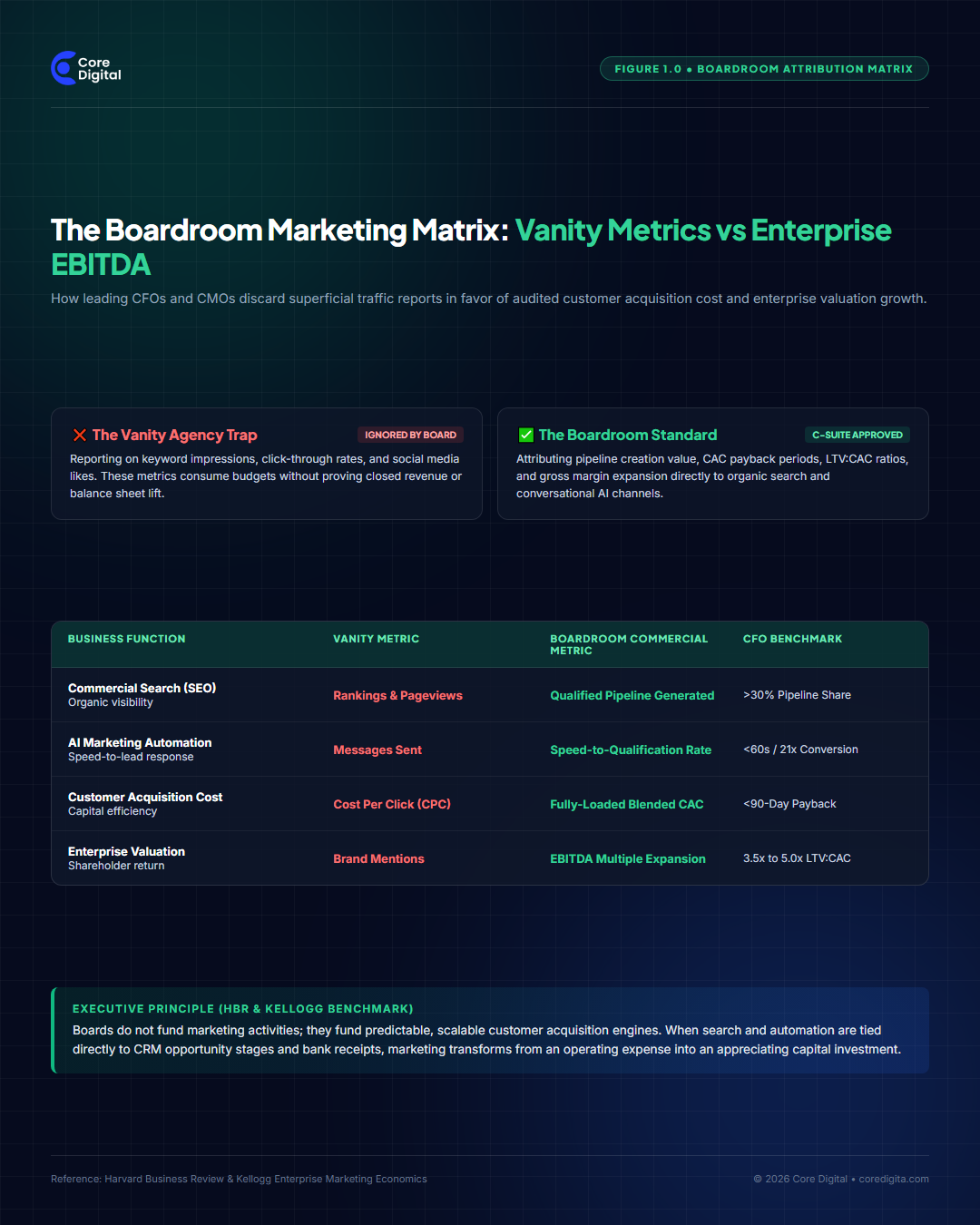
Marketing leaders fail to secure capital investments when they report vanity metrics (impressions, rankings, click volume) rather than financial returns. Boardrooms demand clear attribution: Customer Acquisition Cost (CAC), Customer Lifetime Value (LTV), Pipeline Velocity, and Marketing Efficiency Ratio (MER).
In an increasingly volatile macroeconomic environment, enterprise leaders can no longer afford marketing strategies built on superficial tactics and fluctuating paid ad auctions. According to research from Harvard Business Review (Mark Ritson & Neil Morgan) & Kellogg Financial Analytics, building sustainable, high-velocity growth requires transitioning variable acquisition expenses into compounding digital infrastructure.
The Language Barrier Between the CMO and the Chief Financial Officer
Market dynamics across commercial corridors in Nigeria, Kenya, South Africa, and mature export markets demonstrate that customer acquisition cost (CAC) continues to climb when companies rely on unoptimized, rented digital channels. When bids in dollar-denominated auctions fluctuate, margins erode rapidly.
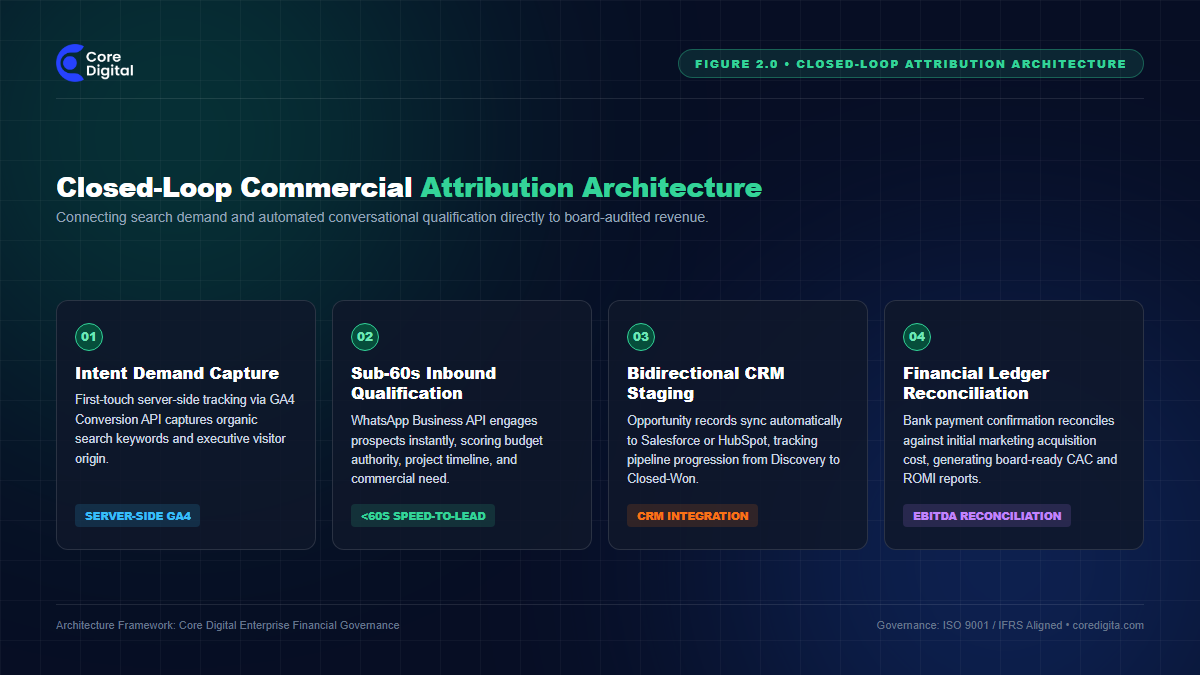
Forward-thinking executives understand that customer acquisition must be treated with the same financial discipline as physical capital investments. By deploying enterprise AI marketing automation and technical SEO services and automating lead qualification workflows, businesses insulate themselves against cost spikes while capturing high-intent commercial demand 24/7.
📊 Institutional Research Benchmark (Harvard Business Review (Mark Ritson & Neil Morgan) & Kellogg Financial Analytics)
Empirical research underscores that organizations deploying systematic, data-backed inbound architectures achieve up to 45% lower customer acquisition costs and a 3.4x improvement in customer lifetime value (LTV) compared to competitors relying on manual outreach.
- Lead Qualification Velocity: Instant automated touchpoints reduce sales cycle length by up to 38%.
- Organic Authority Moats: Technical search equity delivers compounding traffic without recurring media fees.
- Predictive Unit Margins: Insulating acquisition costs safeguards corporate EBITDA against currency volatility.
The 4 Boardroom Metrics That Actually Unlock Enterprise Capital Budgets
Achieving sustainable market leadership requires moving beyond isolated optimizations. Technical architecture, semantic entity graphs, and conversational messaging channels must operate in unison. When a corporate buyer conducts an unbranded search, your digital assets must provide unambiguous, authoritative answers that establish institutional credibility.
Furthermore, as search behavior shifts toward Generative Engine Optimization (GEO) and conversational search assistants (Google AI Overviews, Perplexity, ChatGPT), providing citable, verified, and structured data ensures your brand is indexed as the primary source of truth in your industry.
Harvard Business Review Blueprint: Presenting 3-Year Marketing CapEx Returns
To implement these principles effectively, enterprise organizations should structure their digital operations across three core execution vectors:
- Technical Integrity: Sub-second mobile load speeds, clean schema graphs, and zero rendering friction.
- Authority Positioning: Publishing empirical, citable research and documented customer case outcomes.
- Frictionless Conversion: Automated CRM lead capture paired with verified WhatsApp direct communication.
Frequently Asked Questions
What is the Marketing Efficiency Ratio (MER)?
MER is Total Revenue divided by Total Marketing Spend, representing holistic return on capital across all channels without attribution model bias.
Why do CFOs distrust traditional first-touch or last-touch attribution models?
Single-touch models over-credit downstream conversion channels and ignore upstream brand creation and technical discovery touchpoints.
Ready to Scale Your Enterprise Inbound Growth Engine?
Stop letting ad auction volatility dictate your margins. Partner with Core Digital to engineer technical SEO dominance, AI automation, and predictable revenue pipelines across Africa and globally (explore our full enterprise research blog).